
Bangladesh’s real estate sector is currently facing a significant challenge. While the demand for housing continues to grow due to rapid urbanization, population growth, and the expansion of the middle class, the cost of purchasing an apartment has increased substantially over the past few years. Rising land prices, higher construction material costs, increased labor expenses, and elevated financing costs have made home ownership increasingly difficult for many middle-income families.
Over the last three years, the apartment market has experienced a noticeable slowdown. Industry reports indicate that apartment sales declined significantly between 2023 and 2025 as inflation, high interest rates, and economic uncertainty affected purchasing power. At the same time, construction costs increased by approximately 30–35 percent, pushing apartment prices beyond the affordability range of many potential buyers. As a result, a large number of middle-class families have postponed their plans to purchase a home despite having a strong desire for permanent housing.
However, the slowdown in apartment sales does not mean that housing demand has decreased. On the contrary, the demand for affordable housing remains strong. Every year, thousands of new families move to urban areas in search of employment, education, and better living conditions. The challenge is not the lack of demand; rather, it is the growing gap between housing demand and affordability.
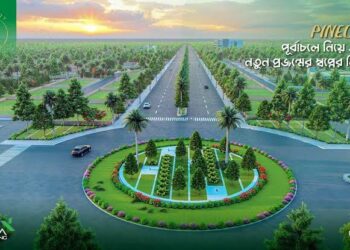
In this context, the land share-based apartment ownership model is emerging as a practical and cost-effective alternative. Under this model, buyers become partial owners of the project land before the construction process begins. Instead of purchasing a fully developed apartment that includes the developer’s land acquisition cost, marketing expenses, administrative overhead, financing costs, and profit margin, buyers participate directly in the project as land shareholders and contribute to the construction cost.
One of the biggest advantages of this model is affordability. Since several layers of intermediary costs can be reduced, buyers may be able to own an apartment at a significantly lower cost compared to conventional developer-driven projects. This makes home ownership more accessible for middle-income families who are often priced out of the traditional real estate market.
Another important benefit is land ownership. In many conventional apartment projects, buyers focus primarily on the apartment unit itself. In contrast, the land share model ensures that buyers own a defined portion of the underlying land. As land values appreciate over time, homeowners can benefit not only from the value of the apartment but also from the increasing value of the land itself.
Transparency is another key strength of the land share model. Buyers can clearly understand how much is being spent on land acquisition and how much is allocated to construction. This transparency helps build trust among stakeholders and allows buyers to make more informed investment decisions.
For Bangladesh’s growing middle class, the land share model offers a realistic pathway to home ownership. It provides an opportunity to purchase apartments in emerging urban areas at a more affordable cost while maintaining long-term investment potential. In an environment where conventional apartment prices continue to rise, innovative ownership structures such as land share projects can play an important role in expanding housing accessibility.
Nevertheless, the success of this model depends on proper governance, legal protection, professional project management, and financial transparency. Clear agreements among stakeholders, effective project supervision, and compliance with regulatory requirements are essential to ensure successful project delivery and protect the interests of all participants.
As Bangladesh continues its journey toward urban development and economic growth, the need for affordable housing solutions will become increasingly important. The land share-based apartment ownership model has the potential to become a sustainable and people-centric approach that helps bridge the gap between rising housing demand and limited affordability. With proper planning and implementation, it could offer thousands of middle-class families the opportunity to achieve their dream of owning a home.
Architect Md. Abdur Rahman Nipu
Managing Director, Nex Real Estate