

Tabassum Imam
CEO — Nex Real Estate
Vice President — Real Estate Professional Forum
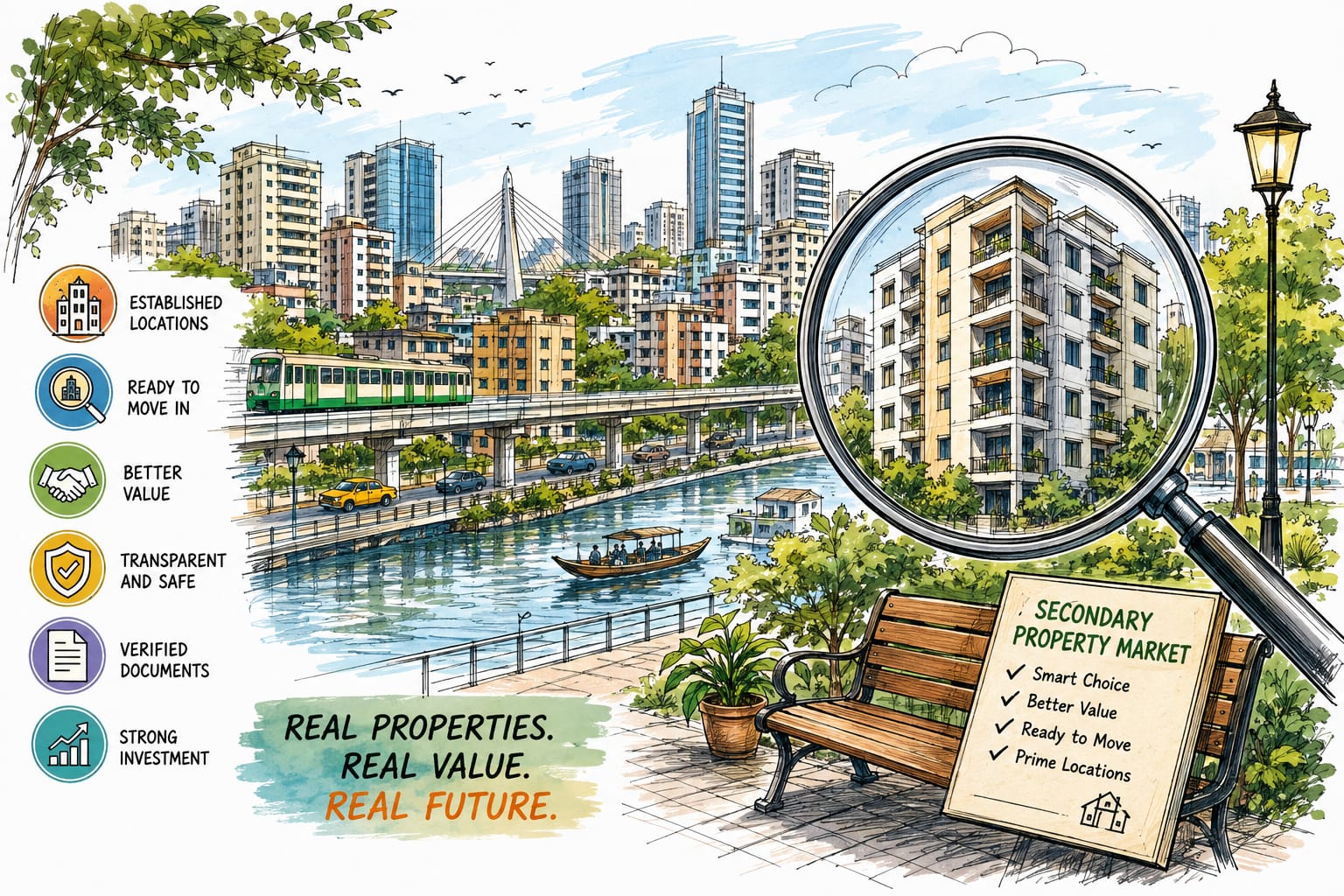
Bangladesh’s real estate sector has grown significantly over the past few decades. New apartments, commercial buildings, land developments, and different types of housing projects have been developed, particularly in Dhaka and other major cities. Alongside the market for new properties, another important market has gradually emerged—the secondary property market, also known as the resale property market.
Simply put, when an owner decides to sell an apartment, land, office, or commercial space that was previously purchased, that property becomes part of the secondary property market. In many countries, the secondary market is a major part of the overall real estate industry. Demand for resale properties is also increasing in Bangladesh. However, the market is still largely unorganized.
The situation becomes clearer when we look at Dhaka. Every day, apartments, land, offices, and commercial properties in areas such as Dhanmondi, Gulshan, Banani, Uttara, Bashundhara, Mirpur, and Mohammadpur come onto the market for resale. Property owners may decide to sell for different reasons, including family needs, new investment plans, business requirements, or relocation. At the same time, many buyers are interested in purchasing ready and usable properties instead of newly built or under-construction apartments.
One of the biggest advantages of the secondary property market is that buyers can usually see the actual property before making a decision. They can check the condition of the building, the surrounding environment, road and transportation facilities, and the availability of schools, hospitals, markets, and other essential services.
When purchasing an under-construction property, buyers often have to make decisions based on plans, drawings, and future commitments. With a completed property, however, buyers can see what they are actually purchasing.
The secondary market can also offer opportunities to purchase properties at reasonable prices. An owner may need money urgently, relocate abroad, or sell an existing property to invest in another one. Business or family circumstances may also create the need for a quick sale. In such situations, buyers may find opportunities to purchase properties in good locations at competitive prices.
However, Bangladesh’s secondary property market faces several major challenges. One of the most important is the lack of reliable information. When an owner wants to sell a property, they may not know where to find a genuine buyer. Similarly, buyers often struggle to identify available properties that match their preferred location, requirements, and budget.
Information about the same property can sometimes vary between different individuals, brokers, or organizations. The asking price may be different from one source to another. There may also be confusion about the actual size of the property, ownership, documents, and other important details. These issues create uncertainty for both buyers and sellers.
Trust is another major concern. Real estate is not an ordinary product. For many people, purchasing a home or a piece of land means investing a significant portion of their lifetime savings. Therefore, accurate information, proper verification, and secure transactions are extremely important.
Before purchasing a property, buyers should verify ownership, title deeds, mutation records, land taxes, approvals, and other necessary documents. When buying an apartment, it is also important to review the building approvals, land ownership, and other relevant legal and technical documents. For an ordinary buyer, however, checking all these matters independently can be difficult.
This is where professional real estate companies and experienced property consultants can play an important role.
The responsibility of a professional real estate consultant should go beyond simply introducing a buyer to a seller. Professionals should provide accurate information, conduct preliminary property verification, help both parties understand the market value, and make the overall transaction as transparent, safe, and simple as possible.
Technology can also play a major role in developing Bangladesh’s secondary property market. A reliable digital platform containing verified property listings could significantly improve transparency. Buyers should be able to access essential information such as photographs, videos, location, property size, asking price, ownership status, and other relevant details in one place.
Proper property valuation is equally important.
In many cases, owners set an asking price based on personal expectations, emotions, or incomplete market information. On the other hand, buyers may offer an unrealistically low price because they do not know the actual market value.
A more professional valuation system should consider the property’s location, recent transactions in the area, age of the building, road access, construction quality, facilities, condition, and other relevant factors. A realistic valuation can help both buyers and sellers make better decisions and reduce unnecessary negotiation.
Banks and financial institutions can also contribute significantly to the growth of this market. If accessible and practical home loan facilities for secondary apartments are expanded, more middle-income and upper-middle-income families could have the opportunity to purchase homes in established locations.
We should also understand that a building does not lose all its value simply because it becomes older. A well-built and properly maintained apartment in a good location can retain significant value for many years. This is particularly important in established areas of Dhaka, where land values can be very high. As a result, even older properties may continue to have considerable market value.
A stronger secondary property market would benefit not only buyers and sellers but also the entire real estate industry.
If property owners can sell their assets more easily, they gain greater flexibility and liquidity from their investments. The money from those transactions can then be reinvested in new apartments, land, businesses, or other opportunities. This creates greater movement of capital and can contribute positively to the broader economy.
Bangladesh’s real estate market is now at an important stage of transformation. The future of the industry should not depend only on constructing and selling new buildings. There is also a major opportunity to bring the country’s large existing stock of apartments, land, offices, and commercial properties into a more organized resale market.
To achieve this, the industry needs greater transparency, better use of technology, professional services, realistic property valuation, and, most importantly, stronger trust between buyers and sellers.
Bangladesh’s secondary property market has not yet reached its full potential. With proper planning, professional management, reliable information, and greater use of technology, it has the potential to become one of the most important segments of the country’s real estate industry.
The future of real estate will not be limited to creating new properties. Helping existing properties reach the right buyers, at the right price, through a safe and transparent process will also become an increasingly important part of the industry.
And this is where the true untapped potential of Bangladesh’s secondary property market lies.